
The Letter to the Hebrews, chapter 10
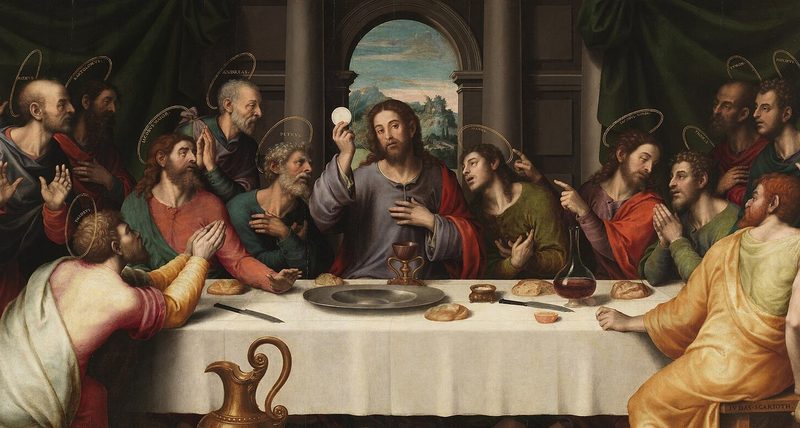
On the night before he died, Jesus took bread and said: “This is my body, which is given for you.” Then he added: “Do this for a commemoration of me.”5
Years later Paul asks the church in Corinth: “The bread which we break, is it not the partaking of the body of the Lord?”6
Christians have done this ever since. The question is what exactly they are doing.
01Your verses first
“By one oblation”
“In the which will, we are sanctified by the oblation of the body of Jesus Christ once.”
“But this man, offering one sacrifice for sins, for ever sitteth on the right hand of God,”
“For by one oblation he hath perfected for ever them that are sanctified.”
Hebrews even says that where sins are forgiven, “there is no more an oblation for sin.”8
Read fairly: Christ’s sacrifice was once, and it was enough. A priest offering sacrifice at an altar every day can look like a denial of that.
Catholics agree with every word of those verses. The question is what the Mass is.
02The Catholic reading
One sacrifice, made present
The Church teaches that the Eucharist is a sacrifice because it re-presents, that is, makes present, the sacrifice of the cross, because it is its memorial, and because it applies its fruit.3
“The sacrifice of Christ and the sacrifice of the Eucharist are one single sacrifice.” “The victim is one and the same”; only the manner of offering is different.4
In the Mass, the Catechism says, the sacrifice Christ offered once for all on the cross remains ever present.9
Is there any hint of this in Scripture itself?
03In Scripture
In every place, a clean oblation
“For from the rising of the sun even to the going down, my name is great among the Gentiles, and in every place there is sacrifice, and there is offered to my name a clean oblation: for my name is great among the Gentiles, saith the Lord of hosts.”
Catholics hear this prophecy in the Mass: the Catechism calls the Eucharist “the pure offering” of the whole Body of Christ to the glory of God’s name.11
“Whereby he is able also to save for ever them that come to God by him; always living to make intercession for us.”
Christ’s priesthood, the Catechism says, did not end with his death.3 And Hebrews says plainly: “We have an altar.”13
So where do we actually part ways?
04The real disagreement
Where we think it lies
Not over whether the cross was enough. Catholics hold that it was, completely. The question is whether the Lord’s Supper only recalls the cross, or makes the one sacrifice present.
The Church teaches that in the Mass “the same Christ who offered himself once in a bloody manner on the altar of the cross is contained and is offered in an unbloody manner.”4
Our Case page on the Eucharist sets out what the earliest Christian writers said.
Once for all, on the cross. Made present, in every place. Catholics believe both.
Careful with the facts
- The Mass does not add to Christ’s sacrifice or repeat it; it is the same one sacrifice, offered in a different manner.4
Christian to Christian
Catholics and Protestants agree that Christ’s death on the cross is the once-for-all sacrifice that saves us. That is the heart of the Gospel, and we share it.
Only one thing to do
Your one next step
Read Hebrews 10:1-18, then Luke 22:14-20. Ask how the writer of Hebrews and the Last Supper fit together.
Read Hebrews 10Keep going
Notes
- Hebrews 10:12, Douay-Rheims. read the chapter
- Hebrews 10:14, Douay-Rheims. read the chapter
- Catechism of the Catholic Church, paragraph 1366. vatican.va
- Catechism of the Catholic Church, paragraph 1367. vatican.va
- Luke 22:19, Douay-Rheims. read the chapter
- 1 Corinthians 10:16, Douay-Rheims. read the chapter
- Hebrews 10:10, Douay-Rheims. read the chapter
- Hebrews 10:18, Douay-Rheims. read the chapter
- Catechism of the Catholic Church, paragraph 1364. vatican.va
- Malachias 1:11, Douay-Rheims. read the chapter
- Catechism of the Catholic Church, paragraph 2643. vatican.va
- Hebrews 7:25, Douay-Rheims. read the chapter
- Hebrews 13:10, Douay-Rheims. read the chapter
Translations of the Fathers and councils are public-domain 19th-century editions. Catechism links open vatican.va. Scripture: Douay-Rheims, Challoner revision. Stone & Incense restates Church teaching and history in plain words; our wording is not an official Church text. Report an error.