
Journeys / Curious, or no faith / Step 3 of 9
A letter to a man named Theophilus
A man named Luke sits down to write to a friend, “most excellent Theophilus.”3 Many people, he says, have already written accounts of Jesus, based on those “who from the beginning were eyewitnesses and ministers of the word.”4
He has gone over everything carefully from the beginning, so that his friend can know the truth of what he has been taught.5
Eyewitnesses. In order. From the beginning. He writes like someone who expects to be checked.
01The question
Old books, big claims
It is a fair question. These are ancient books making extraordinary claims. Why should anyone take them seriously?
The Church does not dodge it. It says the four Gospels, “whose historicity she unhesitatingly affirms,” faithfully hand on what Jesus really did and taught.1
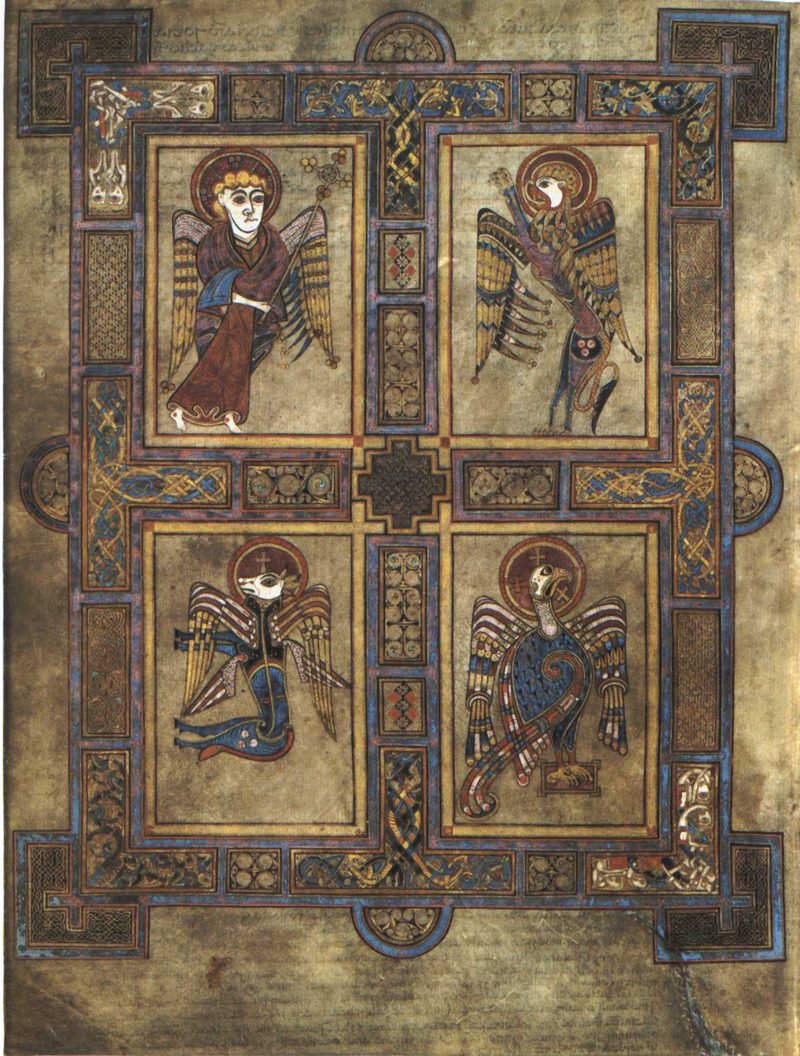
So who were these writers, and how close were they to Jesus? Around AD 180, a bishop in what is now France named them.
02The evidence
A bishop names the four
St Irenaeus, bishop of Lyons, wrote around AD 180: “Matthew also issued a written Gospel among the Hebrews in their own dialect, while Peter and Paul were preaching at Rome, and laying the foundations of the Church.”8
“Mark, the disciple and interpreter of Peter, did also hand down to us in writing what had been preached by Peter.” “Luke also, the companion of Paul, recorded in a book the Gospel preached by him.”8
And John, “the disciple of the Lord, who also had leaned upon His breast, did himself publish a Gospel during his residence at Ephesus in Asia.”8
Look at how ordinary the details are. Who wrote. Whose preaching they recorded. Where they lived. It reads less like legend and more like a family tree.
But how did the story travel from Jesus to the page? The Church describes three stages.
03The process
From a life, to preaching, to the page
<b>First, the life:</b> what Jesus really did and taught, until the day he was taken up to heaven.1
<b>Then, the preaching:</b> after the Ascension, the apostles told people what he had said and done, now with a fuller understanding.1
<b>Finally, the writing:</b> the Gospel writers chose some of the many things handed on, summarised or explained others, always telling “the honest truth about Jesus.”1
Which explains something that puzzles many first-time readers. The four Gospels do not tell every story the same way.
04The objection
Four voices, one Jesus
The writers selected, summarised and explained with the needs of their own churches in mind.1
So to read them well, you ask what each human author truly wanted to say.9 You notice the kind of writing it is, and the customs of speaking and storytelling in their time.10
Four friends describing the same wedding will not use the same words. That does not mean there was no wedding.
The Catechism also notes that the circumstances of Jesus’ death, handed on by the Gospels, are lit up by other historical sources too.11
And the Gospel writers are open about one more thing. They did not tell us everything.
05The ending
Why they were written
“Many other signs also did Jesus in the sight of his disciples, which are not written in this book. But these are written, that you may believe that Jesus is the Christ, the Son of God: and that believing, you may have life in his name.”
Almost nothing is said about Jesus’ hidden years at Nazareth, and much of his public life is left out. What is there was written for one reason: so that you may believe, and have life in his name.13
They were written by people who were among the first to believe, and who wanted to share it.14
John told you exactly why he wrote. The only fair way to test it is to read one.
Your move
Try this, this week
- Read Luke 1:1-4 slowly. Notice the words “eyewitnesses” and “in order”.
- Read Mark in one sitting. It is the shortest Gospel.
- Note one thing about Jesus that surprises you.
- Read 1 Corinthians 15:3-8. Paul lists witnesses who saw the risen Christ, many still living when he wrote.
You’ll need
- A Bible, open to Luke 1 and John 20.
- An hour or two to read the Gospel of Mark straight through.
Remember Read one whole Gospel before deciding what you think.
Optional: watch a short film
Video: Are the Gospels historically reliable?, Catholic Answers Live (Catholic Answers). Link checked 4 October 2026. Loads from YouTube (privacy-enhanced mode) only when you press play. Watch on YouTube
What this video covers (summarized from the publisher’s description, not a transcript): Catholic Answers apologist Trent Horn answers a caller who asks how to defend the historical reliability of the Gospels when talking with skeptics.
What the Church teaches on this: The Church unhesitatingly affirms the historicity of the four Gospels. CCC 126
Videos come from faithful Catholic teachers. Where a video and this page differ in wording, the Catechism and Scripture cited here are the authority.
If this is hard
If you were taught that the Bible cannot be trusted, or were hurt by people who used it as a weapon, it is fine to go slowly. Hard questions are normal. A priest or a Catholic friend who knows Scripture can read a Gospel with you and talk through what puzzles you.
Two questions people ask
Who wrote the Gospels?
The Catechism says the Gospels were written by men who were among the first to have the faith and wanted to share it with others.14 Luke writes that many had set forth a narration of these things, as they were delivered by those “who from the beginning were eyewitnesses and ministers of the word.”4
Why do the Gospels differ in details?
The Catechism explains that the sacred authors selected certain of the many elements handed on, and synthesized or explained others with an eye to the situation of the churches. They did this “always in such a fashion that they have told us the honest truth about Jesus.”1
Who decided which books are in the Bible?
It was by the apostolic Tradition that the Church discerned which writings are to be included in the list of the sacred books, called the canon of Scripture. It includes 46 books for the Old Testament and 27 for the New.15
Only one thing to do
Your one next step
Read the Gospel of Mark in one sitting, like a book rather than a rulebook. It is the shortest of the four, about as long as a film. Then decide what you think.
Start reading MarkStep 3 of 9 · Curious, or no faith
If Jesus really founded something, where is it now? Why a Church at all?
Step 4: Why a Church?Take it with you
Printable one-page cardDownload card (A4 PDF)Download card (US Letter PDF)Short link: stoneandincense-preview.pages.dev/go/cu3
Notes
- Catechism of the Catholic Church, paragraph 126. vatican.va
- Catechism of the Catholic Church, paragraph 125. vatican.va
- Luke 1:3, Douay-Rheims. read the chapter
- Luke 1:1-2, Douay-Rheims. read the chapter
- Luke 1:3-4, Douay-Rheims. read the chapter
- Catechism of the Catholic Church, paragraph 105. vatican.va
- Catechism of the Catholic Church, paragraph 106. vatican.va
- St. Irenaeus of Lyons, Against Heresies III.1.1 (c. 180). Ante-Nicene Fathers vol. 1 (1885). ccel.org
- Catechism of the Catholic Church, paragraph 109. vatican.va
- Catechism of the Catholic Church, paragraph 110. vatican.va
- Catechism of the Catholic Church, paragraph 573. vatican.va
- John 20:30-31, Douay-Rheims. read the chapter
- Catechism of the Catholic Church, paragraph 514. vatican.va
- Catechism of the Catholic Church, paragraph 515. vatican.va
- Catechism of the Catholic Church, paragraph 120. vatican.va
Excerpts from the English translation of the Catechism of the Catholic Church for use in the United States of America Copyright © 1994, United States Catholic Conference, Inc. – Libreria Editrice Vaticana. Used with Permission. English translation of the Catechism of the Catholic Church: Modifications from the Editio Typica copyright © 1997, United States Conference of Catholic Bishops – Libreria Editrice Vaticana. Scripture: Douay-Rheims, Challoner revision (public domain). Early Christian writers: Ante-Nicene Fathers (1885, public domain). Video: “Are the Gospels historically reliable?,” Catholic Answers Live, supporting material, not a teaching source.
Scenes marked “Imagine” are an invitation to picture the moment, not a historical record. Stone & Incense restates Church teaching in plain words; our wording is not an official Church text. Report an error.