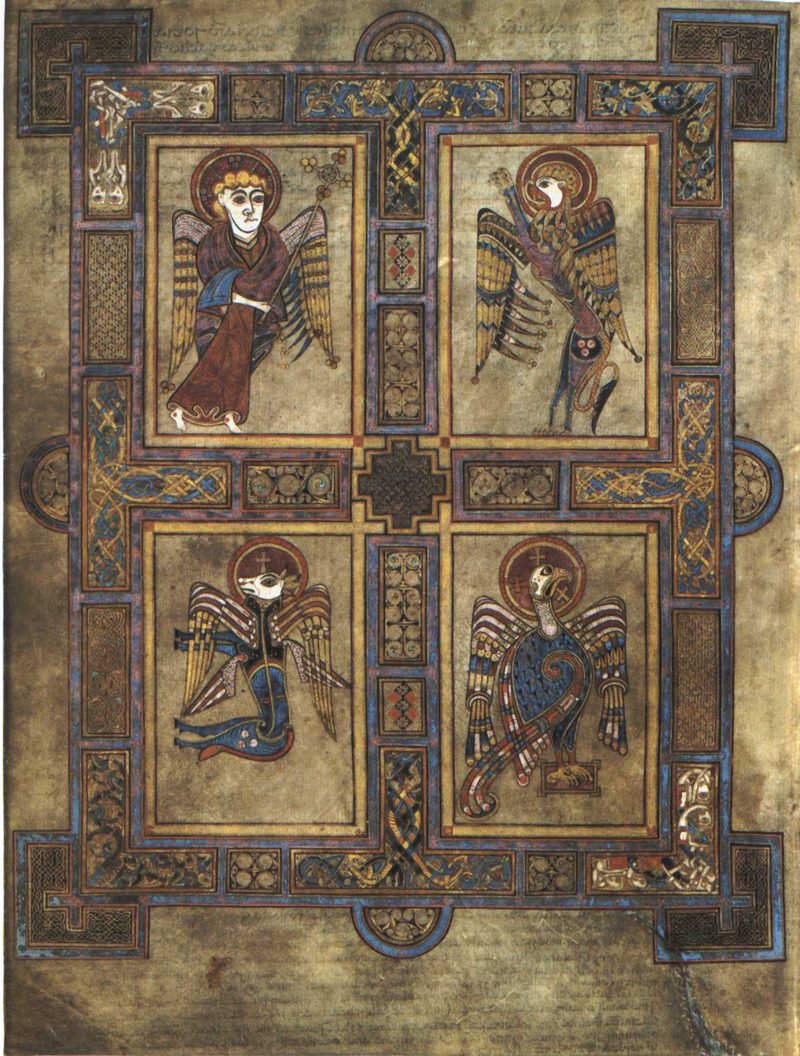

Alexandria, Egypt, Easter of the year 367
In 367, St Athanasius, the bishop of Alexandria in Egypt, sends his Easter letter to his churches.32 In it he writes down the books that Christians should read as Scripture.3
His New Testament has 27 books, the earliest known list of exactly the books in today’s New Testament.32 And he adds: “Let no man add to these, neither let him take ought from these.”3
But one bishop writing a letter does not settle it for everyone. So how did the list become the Bible you can buy today?
01The principle
Discerned, not invented
The Catholic Church teaches: “It was by the apostolic Tradition that the Church discerned which writings are to be included in the list of the sacred books.”1 The Church accepts as inspired 46 books of the Old Testament and 27 of the New.5
Discerned means recognised. The Church did not make the books holy; it recognised which ones had been handed down from the apostles as Scripture.
After Athanasius, the bishops began to meet about it.
02The councils
Rome, Hippo and Carthage
A list of the books is attributed to a council held at Rome under Pope Damasus in 382. It survives in a later compilation, the Decretum Gelasianum, and scholars debate how much of that document goes back to 382.2
African bishops meeting at Hippo in 393 and at Carthage in 397 approved a list of the canonical Scriptures.2 The Council of Carthage of 419 repeated it, with Tobit, Judith and two books of Maccabees among the Old Testament books.7
“Let this be sent to our brother and fellow bishop, Boniface, and to the other bishops of those parts, that they may confirm this canon, for these are the things which we have received from our fathers to be read in church.”
Notice their reason. Not “we have decided.” “We have received.”
03The definition
Florence and Trent
The ecumenical Council of Florence set out the same list of books in 1442, in its decree of union with the Coptic Church.9
On 8 April 1546 the Council of Trent solemnly defined the canon for the whole Church. It did not invent a new list: it received the books “entire with all their parts, as they have been used to be read in the Catholic Church.”4
In order, then: the Church recognised the list gradually, over centuries.12 Athanasius’s Easter letter of 367 is the earliest known list matching the 27-book New Testament.32 Regional councils at Rome (382, an attribution scholars debate), Hippo (393) and Carthage (397 and 419) affirmed the list.27 The Council of Florence taught it in 1442, and the Council of Trent solemnly defined it in 1546, after long use in the Church.94
Trent defined what the Church had long been reading. Your Bible’s New Testament is the same list Athanasius wrote down in 367.
Careful with the facts
Christian to Christian
Catholic and Protestant Bibles share the same 27 New Testament books. The difference is seven Old Testament books (and parts of Esther and Daniel), which Catholics call deuterocanonical and many Protestants call the Apocrypha. Every Christian who reads the New Testament is reading a list handed on by the early Church.
Watch
Canon of Scripture: What criteria did the early Christians use to determine it?Catholic Answers · Catholic Answers Live · 6 minYouTube
Internet’s Most Asked Questions about the BibleJeff Cavins · Ascension Presents · 16 minYouTube
From the official channels of the teachers named. Links checked 4 October 2026; an editor has not yet watched every video in full. Scripture and the Catechism cited on this page are the authority. All videos by topic.
Only one thing to do
Your one next step
Open any Bible to its contents page and count the New Testament books. You will find 27, the same list Athanasius wrote down in 367. Then pick one and start reading.
Open the BibleKeep going
Notes
- Catechism of the Catholic Church, paragraph 120. vatican.va
- Bruce M. Metzger, The Canon of the New Testament: Its Origin, Development, and Significance (Oxford: Clarendon Press, 1987). scholarly study
- St. Athanasius, Festal Letter 39 (367). Nicene and Post-Nicene Fathers, 2nd series, vol. 4 (1892). newadvent.org
- Council of Trent, Session IV (8 April 1546), Decree concerning the canonical Scriptures. trans. J. Waterworth (1848), Hanover Historical Texts Project. history.hanover.edu
- Catechism of the Catholic Church, paragraph 138. vatican.va
- Catechism of the Catholic Church, paragraph 81. vatican.va
- Council of Carthage (419), canon 24, in the Code of Canons of the African Church. Nicene and Post-Nicene Fathers, 2nd series, vol. 14 (1900). newadvent.org
- Catechism of the Catholic Church, paragraph 884. vatican.va
- Council of Florence, Bull of Union with the Copts, Cantate Domino (4 February 1442), Latin text. vatican.va (Latin). vatican.va
Translations of the Fathers and councils are public-domain 19th-century editions. Catechism links open vatican.va. Scripture: Douay-Rheims, Challoner revision. Stone & Incense restates Church teaching and history in plain words; our wording is not an official Church text. Report an error.