
Home / The saints / St Josephine Bakhita
Darfur, Sudan, about 1878
A little girl in Darfur, about nine years old, is seized by slave traders.1
She is sold five times in the slave markets of Sudan, and will carry the scars of her beatings all her life.1
She had only known masters who despised her. In Italy she heard of a different kind of Master.
01St Josephine Bakhita
Paron
In Venetian dialect she called the living God her “paron”, her master, the Lord above all lords who is goodness itself.1
“I am definitively loved”
She was baptized on 9 January 1890 by the Patriarch of Venice.1
02St Josephine Bakhita
Free
When she was about to be taken back to Sudan, she refused: she did not wish to be separated again from her Paron.1
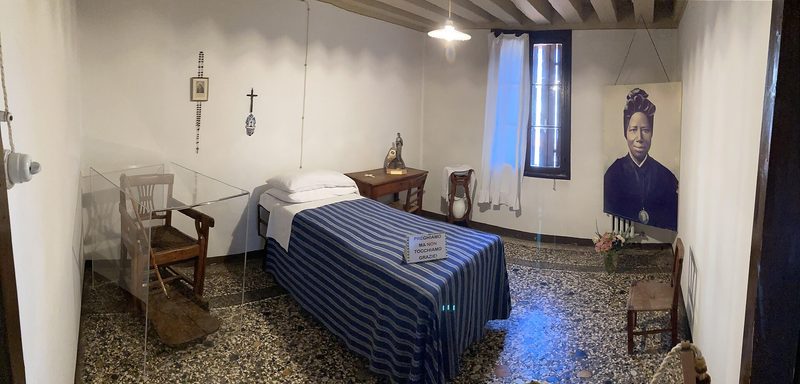
In 1896 she took her vows with the Canossian Sisters, and travelled round Italy to promote the missions.1
Notes
- Pope Benedict XVI, Encyclical Spe Salvi, 30 November 2007. Holy See, official English text. vatican.va
The Catholic Encyclopedia (1913) is in the public domain; we quote the New Advent edition. Texts of the Holy See are quoted briefly from vatican.va. Scripture: Douay-Rheims, Challoner revision (public domain). Photographs: Wikimedia Commons, credited under each image; full list on the photo credits page.
Lines in the narrator’s voice, without a note, are our reflection, not a historical claim. Stone & Incense restates Church teaching in plain words; our wording is not an official Church text. Report an error.