
Home / The saints / St Anthony of Padua
Forlì, Italy, about 1222
At an ordination in Forlì, no one has been chosen to preach.1
A quiet Portuguese friar is ordered to speak; he begins slowly and timidly, then opens the Scriptures with such learning that all are struck with astonishment.1
He had joined the Franciscans hoping to die as a martyr in Morocco. God had a different idea.
01St Anthony of Padua
From Lisbon to Italy
Anthony was born at Lisbon in 1195.1
He became a Franciscan after the relics of the first Franciscan martyrs were brought back from Morocco, and set out for Africa himself, but illness forced him back.1
02St Anthony of Padua
Padua
He had a loud and clear voice, a winning face and a wonderful memory, and he preached openly to rich and poor alike.1
He died on 13 June 1231, at Arcella, just outside Padua.1
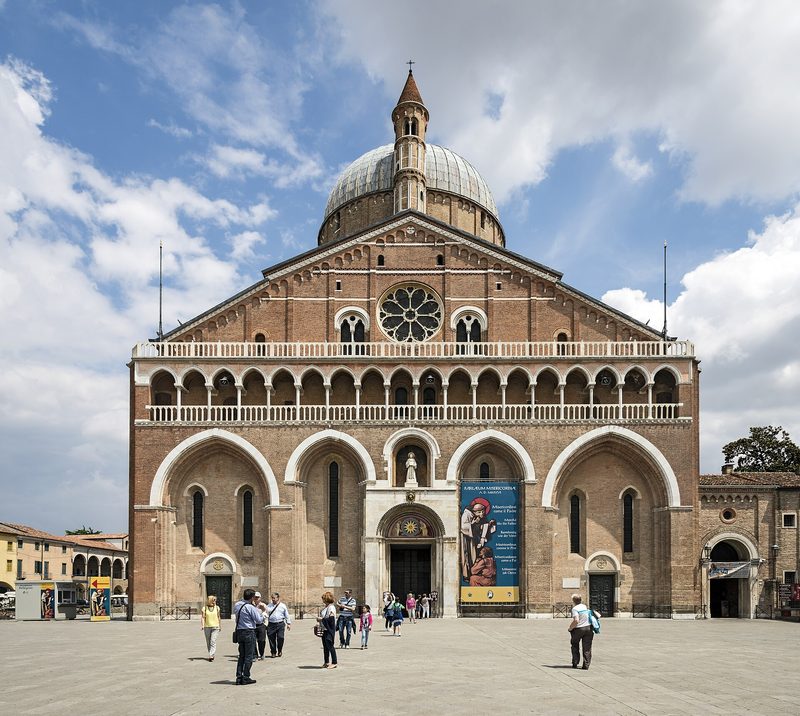
Today people mostly ask him to find their keys. He spent his life helping people find something more important.
Notes
- Catholic Encyclopedia (1913), “St. Anthony of Padua”. New Advent edition. newadvent.org
The Catholic Encyclopedia (1913) is in the public domain; we quote the New Advent edition. Texts of the Holy See are quoted briefly from vatican.va. Scripture: Douay-Rheims, Challoner revision (public domain). Photographs: Wikimedia Commons, credited under each image; full list on the photo credits page.
Lines in the narrator’s voice, without a note, are our reflection, not a historical claim. Stone & Incense restates Church teaching in plain words; our wording is not an official Church text. Report an error.