
Home / The popes / St Clement I
Corinth, around AD 96
In Corinth, a few young members of the church have pushed out their own presbyters.1
A letter arrives from the church of Rome, and it does not ask politely.1
Its author was Clement, bishop of Rome, writing within living memory of the apostles.
01St Clement I
The first letter from Rome
Clement has left one genuine writing, a letter to the Church of Corinth.1
He calls the Corinthians back to peace and to the order the apostles themselves set up.2
He also names Peter and Paul among the greatest examples of faithful endurance.3
What stands out is the tone. Rome writes to a church hundreds of miles away as if it is responsible for it.
02St Clement I
What we know, and what we don’t
Early writers place Clement third after Peter, following Linus and Anacletus.1
Later accounts of his exile and death are of uncertain value, and the Catholic Encyclopedia treats them with caution.1
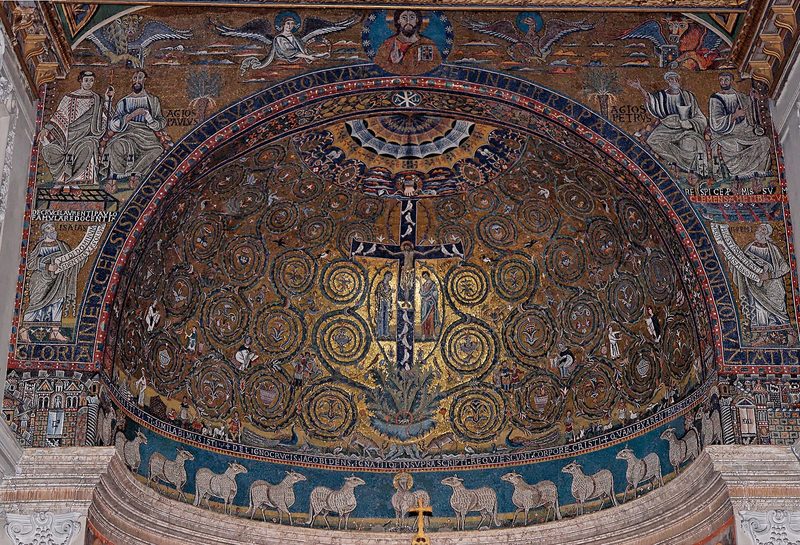
A century later, a former slave would become pope.
Notes
- Catholic Encyclopedia (1913), “Pope St. Clement I”. New Advent edition. newadvent.org
- St. Clement of Rome, Letter to the Corinthians 42 (c. 96). Ante-Nicene Fathers vol. 1 (1885). ccel.org
- St. Clement of Rome, Letter to the Corinthians (c. 96). Ante-Nicene Fathers vol. 1 (1885), trans. Roberts and Donaldson. newadvent.org
The Catholic Encyclopedia (1913) is in the public domain; we quote the New Advent edition. Texts of the Holy See are quoted briefly from vatican.va. Scripture: Douay-Rheims, Challoner revision (public domain). Photographs: Wikimedia Commons, credited under each image; full list on the photo credits page.
Lines in the narrator’s voice, without a note, are our reflection, not a historical claim. Stone & Incense restates Church teaching in plain words; our wording is not an official Church text. Report an error.