
Journeys / Curious, or no faith / Step 1 of 9
Athens, the first century
A traveller named Paul is waiting for friends in Athens, the city of philosophers.3 Every day he talks with whoever is in the market square, and some of the philosophers start arguing with him.4
Walking through the city, he notices an altar with a strange inscription: “To the Unknown God.”5
Somebody in the cleverest city in the world had built an altar to a God they could not name. Paul tells them they were onto something.
01The question
A desire you did not choose
Maybe you have felt it too. Looking up at a night sky. Sitting beside a hospital bed. That quiet question: is anyone there?
You do not need to believe anything to ask it. And the Church does not treat it as a silly question.
The Catechism begins exactly here: “The desire for God is written in the human heart, because man is created by God and for God.” And God “never ceases to draw man to himself.”1
People everywhere, in every age, have expressed this search in prayers, sacrifices, rituals and meditations, so widely that we may call the human being a religious being.6
“That they should seek God, if haply they may feel after him or find him, although he be not far from every one of us.”
But a desire is not a proof. Can you actually think your way to God?
02The evidence
Clues in the world, and in you
The Church says yes: God “can be known with certainty from the created world by the natural light of human reason.”2
It is careful about the word “proof.” It means not laboratory proof, but “converging and convincing arguments” that can lead to real certainty.8
<b>The clues in the world:</b> things move, change and come into being; the universe has order and beauty. Following those clues, a person can come to know God as the origin and the goal of everything.9
“For by the greatness of the beauty, and of the creature, the creator of them may be seen, so as to be known thereby.”
<b>The clues in you:</b> your hunger for truth and beauty, your sense of right and wrong, your freedom, your conscience, your longing for something infinite: all of these make us ask about God.11
Which raises the obvious objection. Has science not settled all this?
03The objection
Faith and science
The Church’s answer is direct: “there can never be any real discrepancy between faith and reason.” The same God gave us both, and “truth” cannot contradict truth.12
Honest scientific research, done well and respecting moral limits, can never truly conflict with faith.12 That is why the Church welcomes conversation with philosophy and science, and with unbelievers and atheists.13
So if reason can get us this far, why does anyone need more than reason?
04The turn
Why reason is not the whole story
The Catechism is honest: people find it hard to come to know God by reason alone.14
Reason can tell you that someone is there. But to know him as a friend, God chose to reveal himself, and to give us the grace to welcome what he reveals.15
Back in Athens, Paul told the crowd that the God they did not know had made himself known. When he got to the Resurrection, some laughed. Others said, “We will hear thee again.”
And a few believed, among them a man named Dionysius and a woman named Damaris.16
About three centuries later, a seeker found words for that restless feeling. People still quote them.
05The ending
A restless heart
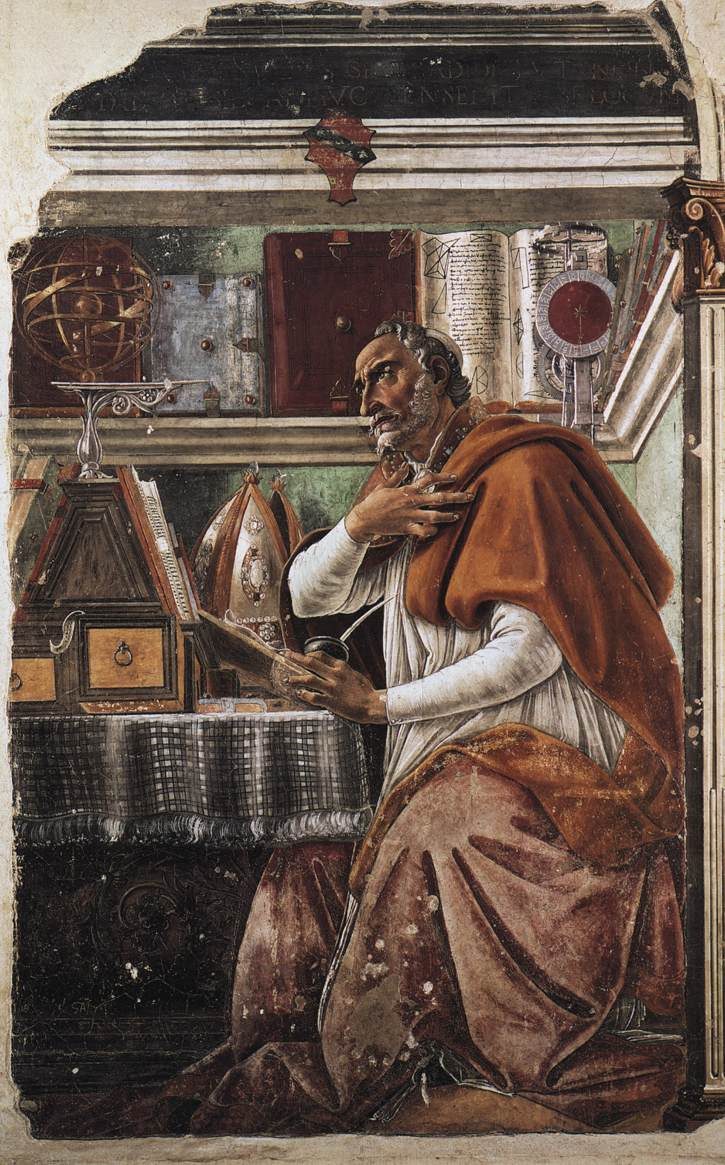
St Augustine began his most famous book with a prayer that the Catechism still quotes. “You have made us for yourself, and our heart is restless until it rests in you.”17
Searching for God takes an honest mind, a good will, “an upright heart”, and other people who help us look. And even when we forget him, God never stops calling us to seek him.17
If someone is there, the next question is obvious. Who is he?
Your move
Try this, this week
- Read Acts 17:22-34. Paul speaks to people who did not share his faith, starting from what they already sought.
- Look at something beautiful for five minutes. Ask yourself where beauty comes from.
- Write down your biggest objection. Bring it to a priest or a Catholic friend.
- Read the first page of Augustine’s Confessions. It is short, and it is written as a prayer.
You’ll need
- Ten quiet minutes, outside if you can.
- An open mind. You do not need to believe anything yet.
Remember Asking the question honestly is already a beginning.
Optional: watch a short film
Video: Bishop Barron on Scientism and God’s Existence, Bishop Robert Barron (Word on Fire). Link checked 4 October 2026. Loads from YouTube (privacy-enhanced mode) only when you press play. Watch on YouTube
What this video covers: our own summary will appear here after an editor has watched the whole video against the sources.
Videos come from faithful Catholic teachers. Where a video and this page differ in wording, the Catechism and Scripture cited here are the authority.
If this is hard
If you have been hurt by religious people, or belief simply feels impossible right now, you are still welcome here. Hard questions are normal, and honest seekers have always had them. A good priest will listen to your questions without pressure, and you do not need to believe anything to talk to one.
Two questions people ask
Can you prove God exists?
The Church speaks of “converging and convincing arguments”, which allow us to attain certainty about the truth, rather than proofs in the sense of the natural sciences.8 She teaches that God can be known with certainty from the created world by the natural light of human reason.2
Does science make God unnecessary?
The Church teaches that methodical research, carried out in a truly scientific manner and respecting moral laws, can never conflict with the faith, because the things of the world and the things of faith derive from the same God.12
What if I do not feel anything?
The Catechism says the search for God demands every effort of intellect, a sound will, an upright heart, and the witness of others who teach us to seek God. It also says that although man can forget God or reject him, God never ceases to call every man to seek him.17
Only one thing to do
Your one next step
Tonight, step outside for five minutes and look up. Ask the question honestly, even if all you can say is “If you are there, show me.” That counts.
See the whole journeyStep 1 of 9 · Curious, or no faith
If someone is there, who is he? Christians point to one man in history. Who is Jesus?
Step 2: Who is Jesus?Take it with you
Printable one-page cardDownload card (A4 PDF)Download card (US Letter PDF)Short link: stoneandincense-preview.pages.dev/go/cu1
Notes
- Catechism of the Catholic Church, paragraph 27. vatican.va
- Catechism of the Catholic Church, paragraph 36. vatican.va
- Acts 17:16, Douay-Rheims. read the chapter
- Acts 17:17-18, Douay-Rheims. read the chapter
- Acts 17:23, Douay-Rheims. read the chapter
- Catechism of the Catholic Church, paragraph 28. vatican.va
- Acts 17:27, Douay-Rheims. read the chapter
- Catechism of the Catholic Church, paragraph 31. vatican.va
- Catechism of the Catholic Church, paragraph 32. vatican.va
- Wisdom 13:5, Douay-Rheims. read the chapter
- Catechism of the Catholic Church, paragraph 33. vatican.va
- Catechism of the Catholic Church, paragraph 159. vatican.va
- Catechism of the Catholic Church, paragraph 39. vatican.va
- Catechism of the Catholic Church, paragraph 37. vatican.va
- Catechism of the Catholic Church, paragraph 35. vatican.va
- Acts 17:34, Douay-Rheims. read the chapter
- Catechism of the Catholic Church, paragraph 30. vatican.va
Excerpts from the English translation of the Catechism of the Catholic Church for use in the United States of America Copyright © 1994, United States Catholic Conference, Inc. – Libreria Editrice Vaticana. Used with Permission. English translation of the Catechism of the Catholic Church: Modifications from the Editio Typica copyright © 1997, United States Conference of Catholic Bishops – Libreria Editrice Vaticana. Scripture: Douay-Rheims, Challoner revision (public domain). Early Christian writers: Ante-Nicene Fathers (1885, public domain). Video: “Bishop Barron on Scientism and God’s Existence,” Bishop Robert Barron, supporting material, not a teaching source.
Scenes marked “Imagine” are an invitation to picture the moment, not a historical record. Stone & Incense restates Church teaching in plain words; our wording is not an official Church text. Report an error.